News
Historic Declaration of Nepal’s First Dignified Menstruation-Friendly Ward: IMPACT STORY
IMPACT STORY:
Historic Declaration of Nepal’s First Dignified Menstruation-Friendly Ward
A Milestone in Advancing Human Rights, Social Justice, and Sustainable Development through Dignified Menstruation
Authors: Sharmila Bhandari (GSCDM), Lal Sharan Chalaune (GSCDM)
This story highlights how a local community in Lalbandi Municipality, Nepal, transformed deeply rooted menstrual discrimination into collective action for dignity, equality, and human rights. The declaration of Ward (smallest local administrative unit in Nepal) No. 3 of Lalbandi Municipality in Sarlahi District as Nepal’s first Dignified Menstruation-Friendly Ward demonstrates that menstrual discrimination is not inevitable, and that communities, institutions, and local governments can work together to create lasting social change.
For many girls, discrimination was part of growing up
For years, 16-year-old Sita (name changed), a student from Ward No. 3 in Lalbandi Municipality, followed restrictions during menstruation without questioning them. She was told not to enter the kitchen, touch water sources, attend religious activities, or sleep in the same room as family members during her period.
“I thought this was normal because every girl around me followed the same norms,” she shared during our conversation. “But after the discussions in school and at home, I realized menstruation is not something impure. I should not lose my dignity because of a natural process.”
Sita’s experience reflects the reality faced by many menstruators in Nepal, particularly adolescent girls and women living within patriarchal social structures where menstrual stigma and discrimination are normalized. In Ward No. 3 of Lalbandi Municipality, these practices affected people across caste, age, and economic backgrounds, including Dalit communities, children, and other marginalized groups.
Menstrual discrimination in the community was deeply rooted and widely accepted as tradition. Menstruators experienced restrictions, shame, silence, exclusion, and limited access to information and services. These practices reinforced unequal power relations and affected people’s dignity, health, education, mobility, and participation in daily life. Many families believed menstruators should be separated during menstruation. Young people lacked safe spaces to discuss menstruation openly. Schools and institutions had a limited understanding of menstruation as a human rights and social justice issue. The problem extended beyond households. Menstrual discrimination was embedded in social norms, institutional behavior, and community attitudes, making it difficult to challenge.
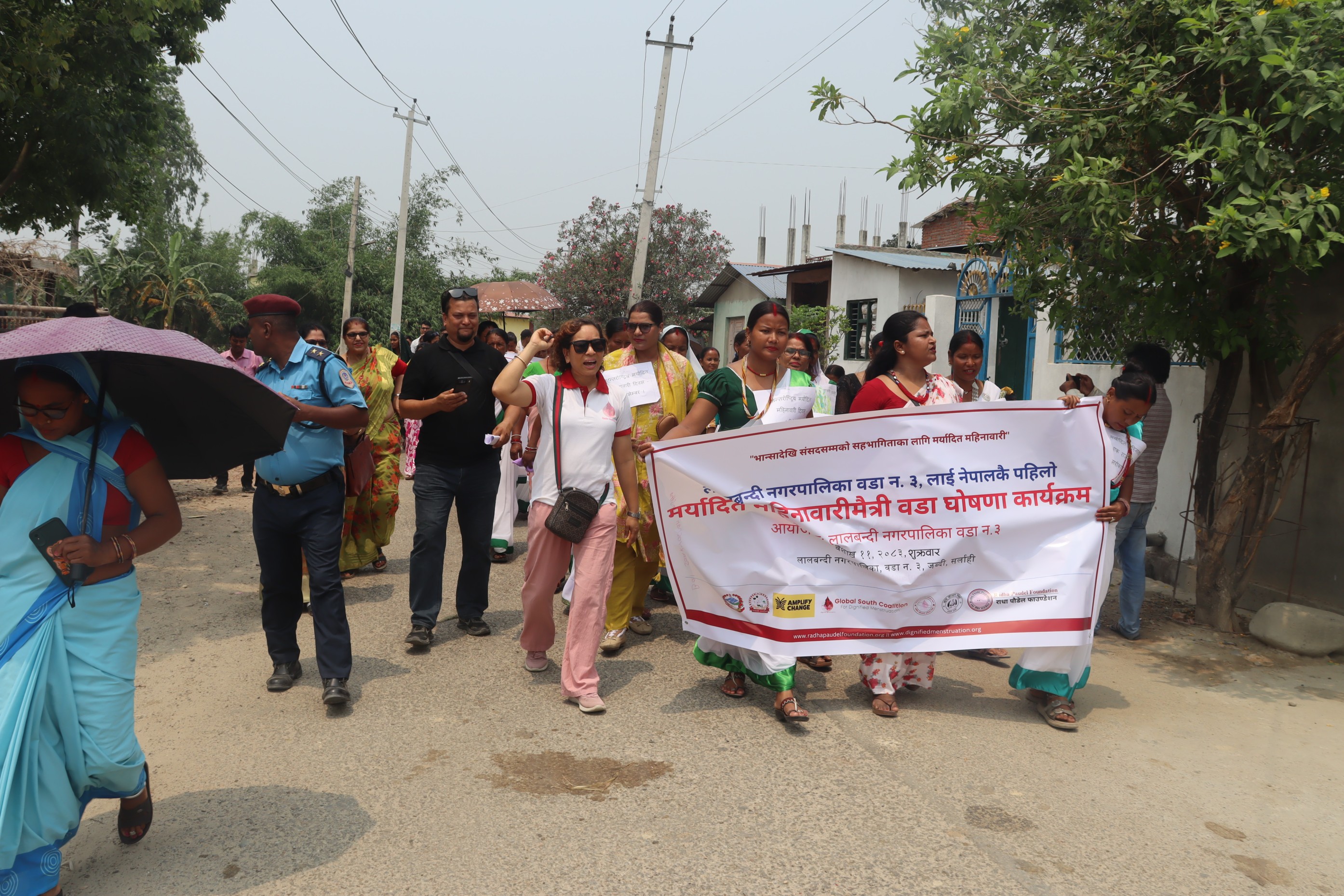
Change started door by door, conversation by conversation.
Under the “Menstrual Dignity for SRHR” campaign, the Global South Coalition for Dignified Menstruation (GSCDM)/Radha Paudel Foundation (RPF) in collaboration with Lalbandi Municipality with support from the Sang pour Sang Uni.e.s Pour la Dignité (SPS) consortium, implemented initiatives to address menstrual discrimination through a Dignified Menstruation lens. SPS is a global initiative working across nine countries in the Global South to advance menstrual health and dignity for all by challenging menstrual discrimination and promoting rights-based approaches. The consortium brings together Fos Feminista, Equipop, the Global South Coalition for Dignified Menstruation, and PSI Europe, and is funded by Agence Francaise de Developpement (AFD). Rather than focusing only on menstrual products and hygiene, the initiative - guided by the Sang pour Sang consortium’s rights-based approach - reframed menstruation as a matter of dignity, freedom, equality, and non-discrimination, positioning menstrual health within broader social justice and human rights frameworks.
An 11-member Dignified Menstruation-Friendly Ward Coordination Committee was formed under the leadership of the Ward Chairperson led by the local government. The committee included representatives from schools, youth clubs, child clubs, women’s groups, health facilities, and community organizations.
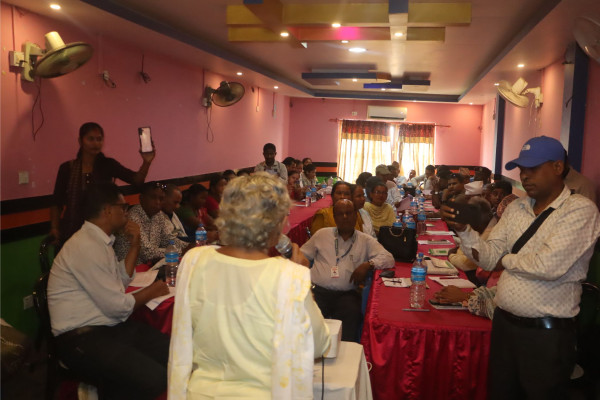
The project team and community volunteers conducted household visits, awareness campaigns, school dialogues, training, reflection meetings, wall paintings, public discussions, and door-to-door interactions. Female Community Health Volunteers played a key role in reaching families and encouraging open discussions around menstruation and rights. Schools became an important space for transformation. Students organized songs, cultural performances, peer-learning sessions, and discussions to normalize conversations around menstruation. The ward also adopted the Sang pour Sang consortium’s “3P Model” on Dignified Menstruation: Person, Pocket, and Planet, encouraging environmentally friendly and reusable menstrual products by connecting menstrual dignity with environmental sustainability.
The process was not always easy. Some community members initially resisted changing long-held practices and beliefs. Project staff and local leaders responded through continuous dialogue, repeated engagement, and by involving both menstruators and non-menstruators in the conversation for the long term. Ward Chairperson Budhadev Chaudhary emphasized during the declaration process:
“This is not only about menstruation. It is about human dignity, equality, and changing how our society treats people.”
On April 24, 2026, Ward No. 3 of Lalbandi Municipality was officially declared Nepal’s first Dignified Menstruation-Friendly Ward.
The declaration reflected real and measurable transformation across homes, schools, health facilities, and local governance systems. Families began removing restrictions related to food, mobility, sleeping arrangements, and participation in household and social activities during menstruation. Community members increasingly recognized that discriminatory treatment during menstruation violates dignity and equality. Schools created safer and more supportive environments where students could openly discuss menstruation without shame. Young people reported increased confidence and understanding about Sexual and Reproductive Health and Rights (SRHR). Health workers and Female Community Health Volunteers strengthened community outreach and integrated dignified menstruation into broader health and rights discussions. Institutionally, Dignified Menstruation became part of ward-level governance discussions, policy conversations, and budget planning, helping ensure sustainability beyond the project period.
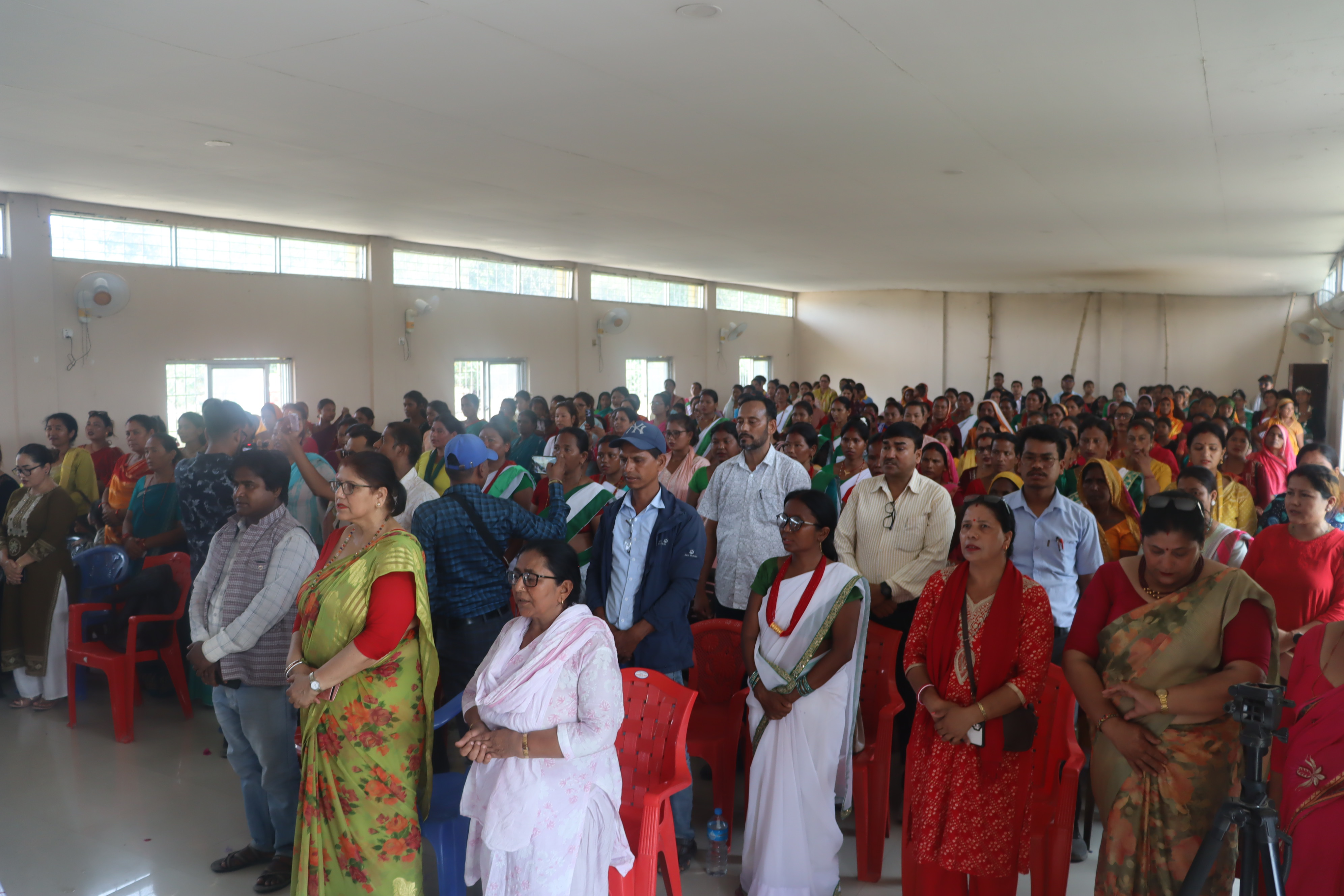
The declaration event itself brought together more than 400 participants, including elected representatives, community members, schools, journalists, and civil society organizations. Community rallies, cultural performances, speeches, and public commitments symbolized collective ownership of the transformation.
One of the most significant changes was behavioral. Community members increasingly embraced the idea that the 25 days of non-menstruation and the 5 days of menstruation should be lived with equal dignity and freedom. This matters because the initiative shifted menstruation from being treated as a source of shame to being recognized as a human rights issue connected to equality, social justice, health, and participation. The ward has now become a national model for addressing menstrual discrimination through community-led transformation.
-1779770164.jpg)
What’s next?
The declaration of Ward No. 3 is just the beginning of a larger movement. Lalbandi Municipality, along with GSCDM and RPF, aims to expand the Dignified Menstruation-Friendly Ward model to additional wards, including Wards No. 9 and 10. There are also plans to strengthen the integration of Dignified Menstruation into local government policies, annual plans, education systems, health services, and budgeting processes.
Continued household engagement, school discussions, community campaigns, and monitoring mechanisms will be necessary to sustain behavior change and challenge deeply rooted discrimination. The experience of Ward No. 3 has already demonstrated that change is possible when communities, institutions, and local governments work together with shared ownership and commitment. As Sita reflected after the declaration ceremony:
“Now we talk openly in our home. My younger brother also understands menstruation. I feel respected in a way I did not before.”